


Europe’s defence capability depends on roads, railways, bridges and digital processes. Anyone moving military equipment across Europe faces a web of customs regulations, dangerous goods regulations, authorisation procedures and national security requirements. Much of this has evolved over time and is paper-based. The military Schengen area is intended to remedy this situation.
Anyone travelling by car or lorry from Germany to Vilnius does not need to prepare any customs documents for their vehicle. Germany, Poland and Lithuania are part of the EU single market and the Schengen Area – so there are no customs checks.
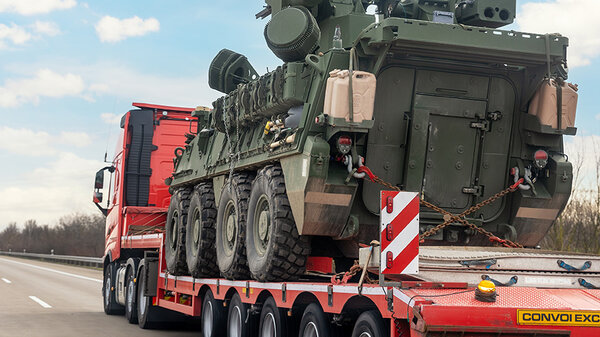
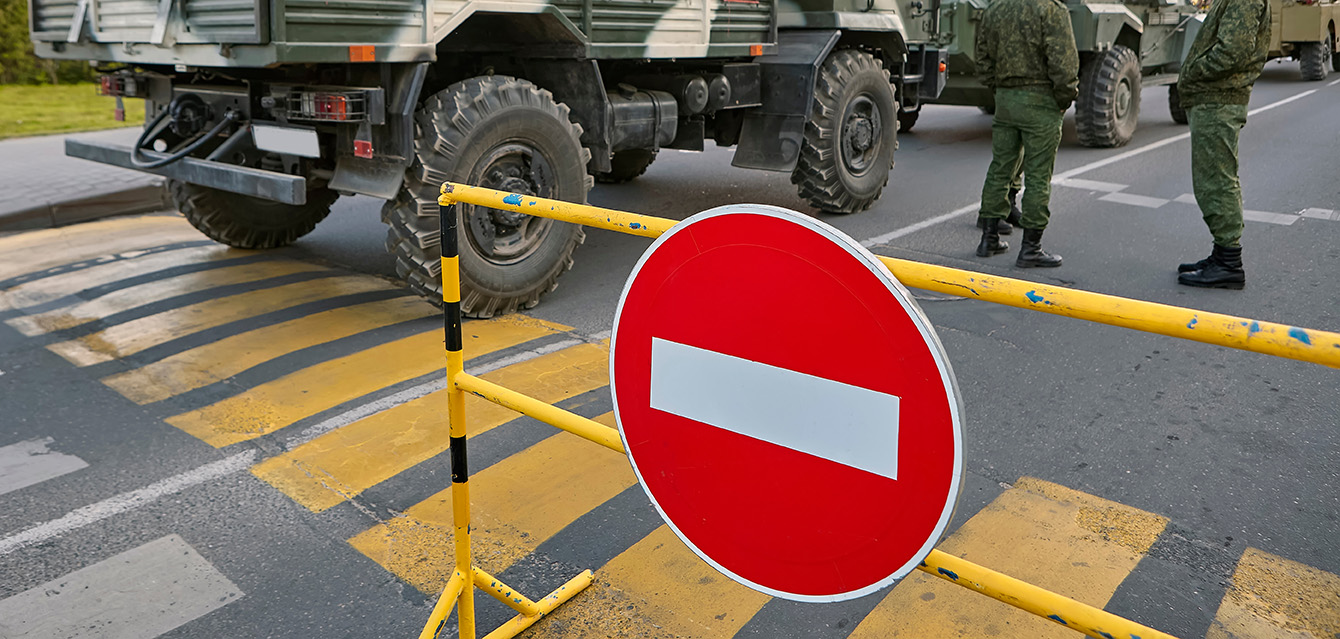
The situation is quite different, however, when a military convoy is heading towards NATO’s eastern flank. Tanks and artillery can use the same roads as holidaymakers and hauliers, but administratively speaking, they are operating in a different world.
At first glance, this seems paradoxical. For years, military officials and politicians have emphasised the importance of rapid troop and equipment deployments to the Baltic states. At the same time, however, military movements across Europe must be meticulously prepared, documented and authorised. Military clearances must comply with civil traffic regulations, dangerous goods legislation and customs regulations. Many of these procedures are still paper-based
So, in an emergency, does Europe’s defence capability falter because of red tape?
“There have long been clear procedures in place for cross-border military movements,”
explains Markus Galla, a military expert at Materna.
“The complexity arises from the interplay of these factors. Customs, transport authorisations, dangerous goods regulations and national security requirements must all mesh seamlessly across several countries.”
From a customs perspective, two documents play a central role: NATO Form 302 and EU Form 302. Both documents can be used as customs documents for military transports. Military transit or transport authorisations run in parallel.
The two forms document specific movements of goods. This includes details of the military activity, the mode of transport, the consignor and the consignee, as well as the goods being transported. This makes it possible to track which equipment is moving through Europe under which customs status.
After all, even a tank is, for the purposes of customs law, initially just a commodity.
The European Commission cites the example of a tank that is temporarily imported into the EU from a third country for training purposes. Applied to a US Army Abrams tank, this means it can remain in Europe under the temporary admission procedure. However, it is now to be transported from Germany via Poland to Lithuania to serve on NATO’s eastern flank. Under customs law, it continues to carry its American ‘history’ and remains a US commodity subject to a customs procedure.
The consequence: whilst an American weapons system purchased by the Bundeswehr can move freely through the single market under customs law, the US Army tank remains under customs supervision. If it is to be moved from Bavaria to Lithuania, its movement must therefore be documented under an appropriate customs procedure. Its American origin, so to speak, travels with it. The two weapon systems can even be transported to Lithuania on the same train, yet be entirely different items in the eyes of customs.
However, no customs duties are payable on certain weapons and military equipment if they are intended for the armed forces of a Member State and for the specified military purposes.
Military purposes? So is a military helicopter purchased abroad not allowed to be used during a flood disaster without customs duties being payable? Yes – the EU has provided for such cases. They are permitted.
Customs law becomes even more peculiar when it comes to military material that is consumed during its use, such as ammunition.
US armed forces bring ammunition from the United States to Europe for an exercise. It is in temporary use. The basic idea behind this customs procedure is that the goods enter the EU for a limited purpose, such as a manoeuvre, and leave again later.
This obviously does not work well in the case of ammunition that has been fired.
But European customs law provides a solution for this too. In the case of military goods in temporary use, consumption or destruction is legally regarded as re-export. In other words: ammunition is deemed to have been exported from the European Union for customs purposes once it has been fired at a firing range. The projectile may still be lodged in a Lithuanian earthwork – but for customs purposes, it is gone.
With a single round, this sounds rather academic. But with an entire brigade, the paperwork begins before the manoeuvre even starts.
A large military formation moves far more than just battle tanks, lorries and howitzers. Added to this are spare parts, fuel and large quantities of ammunition of various calibres.
Pistol and rifle ammunition, artillery shells and 120-millimetre ammunition for main battle tanks have different characteristics and classifications. Added to this are quantities, packaging, dangerous goods regulations and the distribution across individual vehicles or railway wagons.
“During large-scale deployments, it is primarily ammunition and fuel that determine the extent of the checks,”
says Markus Galla.
“Every type of ammunition and every dangerous good requires a unique classification. This information must be available and reliable throughout the entire transport chain.”
Customs is just one part of a much larger transport operation. Heavy vehicles require suitable roads and bridges. Rail transport requires available train paths and suitable wagons. Dangerous goods are subject to special regulations, and military forces need authorisation to move through other countries.
Even within Germany, there is a specific procedure for this: the ‘Marschkredit’, which is, in a sense, the travel ticket for tanks and lorries. A convoy of ten or more military vehicles requires it, as do certain oversized or overweight individual vehicles and certain dangerous goods shipments. The Bundeswehr cites the transport of two Patriot missiles as an example of a dangerous goods consignment for which a ‘Marschkredit’ may be required.
The procedure involves a detail that seems almost archaic. Before departure, the ‘Marschkredit’ number is marked on both sides of each vehicle – in white chalk. After the journey, it can be washed off again.
Temporary authorisation, EU and NATO forms, dangerous goods – that sounds like a lot of hassle. And it is. According to an investigation by the French broadcaster BFM TV, it can currently take up to 45 days to deploy a military convoy from France to Eastern Europe. The news magazine *Focus* cites, amongst other things, a lack of suitable wagons and locomotives capable of operating across borders, limited track capacity, and differing technical standards and national regulations as the causes.
At the same time, EU member states have committed to issuing cross-border movement authorisations within a maximum of three working days.
There are therefore two sides to the problem. On the one hand, there are railways, roads, bridges, wagons and available transport slots. On the other, there are permits, customs procedures, dangerous goods regulations and the necessary exchange of information between the countries involved. The problem is not how fast a train can travel, but when it can finally set off.
The political objective has a catchy name: ‘Military Schengen’. The Federal Ministry of Defence (BMVg) uses the term to describe the plan to move military transports more quickly and easily across borders within Europe. To this end, Germany, the Netherlands and Poland have agreed on a model corridor running from the North Sea ports towards NATO’s eastern flank. As a key transit nation, Germany plays a pivotal role in this.
The corridor encompasses far more than just a fixed route. According to the BMVg, procedures, capabilities and infrastructure are to work together seamlessly. This includes application procedures and time limits for transports, as well as convoy markings, parking and refuelling facilities, and a joint system for the secure exchange of information and the tracking of military movements. The model corridor is also intended to serve as a blueprint for further links across Europe.
Markus Galla knows what this might look like.
“Military movement data requires a clearly regulated flow of information. Each agency involved receives the data it needs for its specific task. Roles, authorisations and security classifications must consistently govern this access.”
Digitalisation is therefore intended to improve military mobility on two levels: on the one hand, it can speed up procedures and, on the other, it can control the flow of information more precisely.
At the start of a movement, the relevant information would be recorded in a structured manner: vehicles and cargo, customs status, ammunition and dangerous goods, route, means of transport and any necessary authorisations.
This data would then need to remain usable across national and system boundaries. Checks already carried out would be traceable. The relevant authorities could supplement their respective decisions. The next step in the process would build on the existing information.
A customs office could identify the status of an Abrams tank. Transport authorities would receive the details they need for routes and transport windows. The authorities responsible for dangerous goods could access the relevant information on the cargo. Military planners would be able to see which authorisations have already been granted and at which stage a process is stalled.
The consumption of military goods could also be tracked. Which ammunition arrived at its destination? Which was used during the exercise? Which delivery is still in transit?
“The aim is an end-to-end digital process,”
says Galla.
“Data is recorded in a structured format once, verified and reused along the route. This allows authorisations, customs information and transport data to be consolidated across multiple countries.”
This is where the concept behind the Secure Digital Military Mobility System (SDMMS) comes in. An initial SDMMS project was developed through the European Defence Fund and demonstrated in Tallinn in 2025. The platform is designed to enable a direct and secure exchange of information between states regarding military movements.
The European Defence Fund has issued a call for proposals for a follow-up project in 2026. This is intended to further develop the existing prototype and, amongst other things, address a federated architecture, tracking and monitoring functions, and the further digitalisation of military customs formalities. The EU expressly requires a secure exchange of information between military authorities and customs authorities.
In the context of this follow-up project, known internally as SDMMS2, Materna is part of a consortium led by Cybernetica from Estonia. The outcome of the selection process is still pending.
SDMMS2 would be capable of reflecting Europe’s diverse institutional landscape. Austria, for example, is an EU member but does not belong to NATO. Switzerland is not a member of either organisation. A federated architecture can accommodate such configurations through appropriate interfaces and agreements.
“Europe needs interoperable systems for military mobility,”
says Galla.
“The states retain their responsibilities and their applications. A common exchange layer ensures that the relevant information is available across national and system boundaries.”
Materna’s role lies primarily in the customs perspective and in requirements engineering – that is, the structured collection and translation of business requirements into technical processes.
This is central to military mobility. Before systems can exchange data, the parties involved must determine what information a customs authority, a military body or a transport authority actually requires. Equally important are common terminology, data models, interfaces and authorisation concepts.
“Customs is an essential component of cross-border military mobility,”
says Galla.
“Materna brings experience from complex digital customs procedures. Our task is to structure business requirements in such a way that interoperable processes for several countries can be created.”
This brings a discipline to the forefront of defence capability that is rarely mentioned in that context: the digitalisation of administration.
The movement of civilian goods is now digitised, but remains spread across numerous national and European systems. A single EU-wide customs platform is only now emerging with the EU Customs Data Hub. Ironically, it is in the context of military mobility that trials are being conducted in parallel to see how a federated cross-border data exchange can function across countries and authorities.